Nous utilisons des cookies sur notre site web afin de vous fournir le meilleur service possible et d'améliorer encore notre site web. En cliquant sur le bouton "Accepter tout", vous acceptez l'utilisation de tous les cookies. Vous pouvez limiter les cookies utilisés en cliquant sur "Accepter la sélection". Vous trouverez de plus amples informations et une option pour révoquer votre sélection dans notre politique de confidentialité.

Nécessaire:

Ces cookies sont nécessaires pour la fonctionnalité de base. Cela vous permet de vous inscrire sur notre site web et notre forum ou de commander des produits avec notre boutique en ligne.

Statistics:

Avec ces cookies, nous collectons des données d'utilisation anonymisées pour notre site web. Par exemple, nous pouvons voir quel contenu est intéressant pour nos visiteurs et quelles résolutions sont utilisées. Nous utilisons ces informations pour optimiser notre site web et vous offrir la meilleure expérience utilisateur possible.

Nécessaire
Statistics

plus

Blog

PCAN-Basic 5.1 adds Rust support as a Foreign Function Interface (FFI) module. This gives Rust developers direct access to the established PCAN-Basic API.

Did you buy a fake PEAK-Product, e.g. a fake PCAN-USB? PEAK-System warns about counterfeit CAN interfaces from China and Taiwan. Learn how to identify fakes and where to buy genuine products.

Discover how Python scripting turns PCAN-Explorer 7 into an automation platform for CAN analysis, diagnostics, testing, logging, reporting, and development workflows.

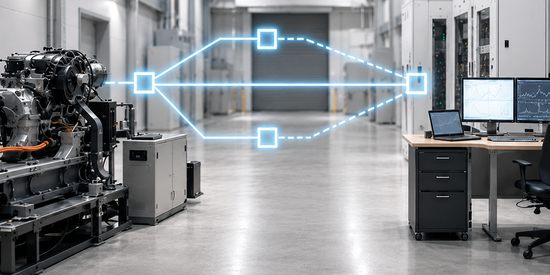
This article explains how CAN data can be efficiently tunneled over Ethernet using UDP Multicast, preserving CAN characteristics while overcoming physical and logical limitations.

Automotive Ethernet is reshaping in-vehicle networking. This blog article explains what engineers need to know about 100BASE-T1 and 1000BASE-T1, from single-pair cabling and PAM-3 signaling to echo cancellation, PHY configuration, and real-world use cases.

Explore how Linux SocketCAN evolves to support CAN XL: new frame semantics, timing and transceiver features, and the driver configuration challenges that emerge with real hardware. Includes insights from PCAN-USB XL and PCAN-Explorer 7, now enabled since Linux 6.19.

DoIP gateways significantly accelerate firmware flashing for battery ECUs: diagnostic data is transmitted via Ethernet (ISO 13400) with high bandwidth, while ISO-TP reliably transports large data packets over CAN/CAN FD. This reduces latency, meets cycle-time requirements, keeps updates compatible, and improves security.

Which HIL class fits your testing needs? A practical overview of HIL, miniHIL and microHIL, including key benefits, trade-offs and typical use cases from development to production.

SENT (SAE J2716) is a simple, robust sensor-to-ECU interface using time-coded signal edges. This overview explains frames, tick timing, performance, and how to test and integrate SENT in automotive setups.

CAN XL continues the CAN evolution – greater data capacity, higher speed, and backward compatibility. Ideal for zonal architectures, sensor fusion, and seamless migration from Classic CAN and CAN FD networks.